THE BEAUTYITEM DETAIL EDIT / 04
Korean blush placement can start with one small decision: where should the strongest color sit? Try a compact patch on the cheek, blend its edge, and check the result before spreading it farther. Pink, peach and rose all work with this approach. The useful part is controlling the shape and finish.
This edit focuses on blush technique, with the portraits as color and styling references. The product examples explain different application methods; they are independent editorial choices, not a record of either artist's makeup kit.

Jang Won-young at the 2024 Melon Music Awards-3 by TenAsia, via Wikimedia Commons, CC BY 3.0. Video still; Wikimedia 500px rendition, displayed resized.

Choose the color on your skin
A pan can look beautiful and still give a different result once blended over your base. Compare a pink and a peach in similar finishes if you can. Look at the color near your usual lipstick and decide whether you prefer a cooler contrast, a warmer wash or a quieter rose between them.
Charlotte Tilbury's shade guide includes peach options for warm undertones and recommends richer, more saturated blush colors for deeper skin. Treat these as starting points for comparison. Skin depth and undertone are separate considerations: a soft edge does not require a very pale shade.
If a color looks chalky or disappears after blending, try a different shade depth or pigment level before buying another brush. You can sheer out a richer color while keeping the hue you wanted.
Match the texture to the job
| Texture | Try it when | Control point |
| Cream | You enjoy tapping color into the base | Load a little onto a finger or brush first |
| Liquid | You want to adjust a small amount carefully | Check the formula's directions before dotting |
| Powder | You prefer a brush and gradual layering | Remove excess before touching the cheek |
Finish is a separate choice. Cream can look subtle or glossy; powder can be matte or luminous. Choose the visible effect you want rather than assuming every product in one format behaves the same way.
Cream: tap the color, then the edge
Charlotte Tilbury's cream blush guide places cream blush before powder products and describes fingertip or brush application. It recommends beginning with a small amount, adding gradually, and using soft patting motions to blend.
For this edit, pick up a little product and place it where you want the strongest color. With a clean finger or a lightly loaded brush, tap around that spot to widen the soft edge. Keep the first patch compact; extending it is easier than deciding where an oversized patch should end.
If you prefer a stick, follow its directions for direct application or transfer a small amount to your tool. A long stripe is not necessary to begin. Let the base settle before working, and use light taps instead of scrubbing the blush across it.
Powder: choose a brush with breathing room
Charlotte Tilbury's powder blush instructions recommend a fluffy, domed brush, light pressure when picking up product, removing excess, and building color gradually. The guide applies powder blush after liquid and cream base products.
Try a brush small enough to fit the area you want to color, with enough softness to diffuse the edge. Touch the pan lightly, remove excess, and place the first sweep at your chosen center. Use the remaining pigment to soften outward rather than reloading immediately.
A denser brush can deposit a stronger patch, which may be useful for precision but needs a lighter hand. If the blush becomes brighter than planned, switch to a clean brush to work on the boundary before deciding whether the center needs adjusting.
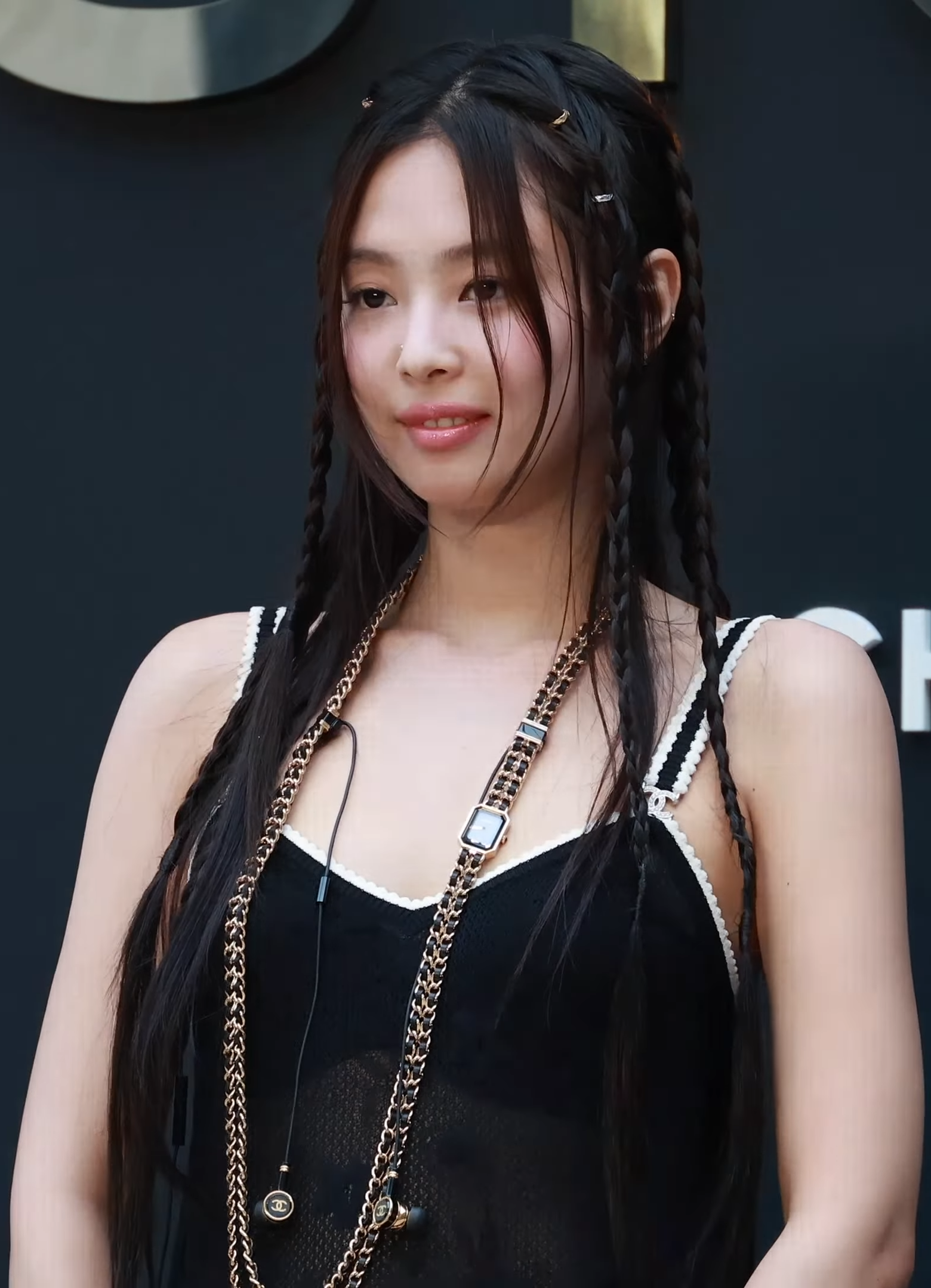
Blackpink's Jennie in Chanel Coco Crush, July 3, 2024 (2) by 티비텐 (TV10), via Wikimedia Commons, CC BY 3.0. Video still; no further edits.

Try two placements, one at a time
For a cheek-centered version, place the strongest color on the rounded cheek area and blend a small halo around it. Relax your expression before deciding how far the patch should extend. This gives you a contained color accent that you can keep understated or build brighter.
For a more outward version, begin a little farther toward the outer cheek and blend along the cheekbone toward the ear. Keep the strongest point visible from the front. The direction changes the arrangement of color; choose it for the look you enjoy.
Test these on separate days with the same blush. That makes it easier to compare placement without a new shade or finish changing the result. You do not need a face-shape label to make the choice.
Let the edge do the work
Step back from the mirror after each light layer. Check the blush beside your eye makeup and lip color, then look in ordinary daylight if available. Event lighting and edited portraits are useful mood references, but your own everyday light is the better place to choose the final intensity.
Keep a little clean space between your blush and lower-eye makeup if that helps each detail read clearly. A full sweep across the nose or a second blush topper is optional. Finish when the color and edge feel balanced together.
Three useful answers
Is pink blush only for cool undertones?
No. Pinks vary from warm rose to cooler berry and bright fuchsia. Compare the actual shade on your skin and with your other makeup, rather than choosing from the color-family name alone.
Can a deeper blush still look soft?
Yes. Use a small amount and soften the boundary. Shade depth, color saturation and the size of the patch are different controls; a pale product is not the only route to a subtle finish.
Should I layer cream and powder blush?
You can, if the formulas suit that use, but one product is enough to practice placement. Get the shape you like first. Follow each product's directions when combining textures.
Make the next purchase specific
Our Korean beauty tools guide helps you choose between application tools. For Korean product labels and similar-looking packages, check our guide to names, shades and refills. Decide whether the missing piece is color, texture or control before adding another blush.
'K-Beauty Shopping Guides' 카테고리의 다른 글
| Korean Eyeliner: Brown or Black, Pencil or Liquid? (0) | 2026.10.27 |
|---|---|
| Aegyo Sal Makeup: A Subtle Under-Eye Highlight and Shadow (0) | 2026.10.27 |
| Korean Lip Tint vs Lipstick: Colour, Finish and Touch-Ups (0) | 2026.10.27 |
| Cushion Foundation vs Liquid Foundation: Choose Your Korean Makeup Base (0) | 2026.10.27 |
| Wonyoung Makeup: Pink Blush, Light and a Glossy Lip (0) | 2026.10.26 |