THE BEAUTYITEM APPLICATION EDIT / FOUNDATION TOOLS
A foundation brush and a makeup sponge can both belong in a small Korean makeup routine. Choose between them by the movement you can control and the part of the base you want to adjust. The useful comparison happens with your foundation on your face: how easily can you place it, blend its boundary and stop at the coverage you enjoy?
This guide focuses on application. The portraits are style references, and the product examples explain their makers' directions. They do not identify a celebrity's tools or reproduce an artist's private routine.
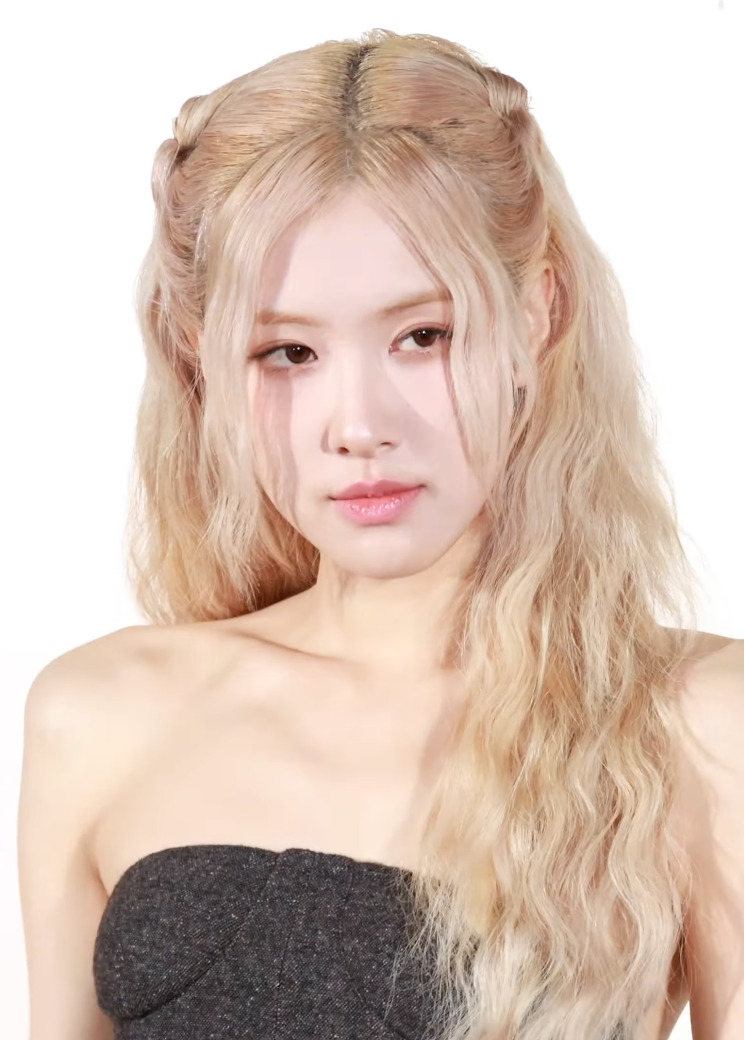
Photo: TV10, Blackpink Rosé Rimowa 1.jpg, via Wikimedia Commons, CC BY 3.0. Still from the credited event video; no additional edits.

Choose the job before the tool
Separate placing product from softening an edge. You might want foundation mainly through the centre of the face, with less visible coverage towards the sides. Or you might prefer a more even-looking layer throughout. Name that aim before deciding that every brush must give a heavy base or every sponge must make it sheer.
The formula, amount, preparation and tool can all affect the result. If you already like your foundation, keep it while comparing tools. A new applicator should solve a particular problem, such as reaching beside the nose or controlling the boundary near the jaw.
| What you are trying to do | What to compare |
| Place a controlled amount | How much product is on the tool before it reaches your face |
| Blend a small area | Whether the working surface fits that area comfortably |
| Soften a visible edge | What happens when you blend without immediately adding more foundation |
| Keep the routine practical | The tool's preparation, cleaning and drying directions |
A domed-brush example: work outwards
Real Techniques' Expert Face Brush directions describe blending liquid or cream foundation with back-and-forth movements, beginning centrally and working outwards. The brand identifies a domed brush for that job. Read this as one application method for a particular tool.
For your first attempt, work on a manageable section rather than dotting a large amount everywhere. Check the edge of that section before moving on. If the foundation already looks even there, avoid loading the brush again simply because you have reached a new part of the face.
Notice how much of the brush touches the skin. A broad sweep and a smaller, more controlled movement may spread product over different areas. Keep the movement deliberate enough that you can see where the coverage ends.
Another brush may support different movements
MAC's 170 Synthetic Rounded Slant Brush instructions allow sweeping, stamping or buffing onto the selected area. This gives another useful example: brush application is not one universal motion.
Try a supported movement on a small area, then inspect what it did. If sweeping spreads the patch farther than intended, consider whether a more local application would suit the job. If you prefer buffing, check the outer boundary before making repeated passes.
You do not need to combine every suggested movement in one application. Pick the method that fits the formula and the result you want, then change one part if you dislike the outcome.
A sponge example: prepare, squeeze, bounce
The Original Beautyblender directions specify wetting the sponge, squeezing out excess water and bouncing the makeup onto the face. Follow that preparation when using this product, rather than borrowing the dry-use method of an unrelated applicator.
Use a gentle bouncing motion over the area you selected, checking the boundary before extending it. A sponge does not make a large first application necessary. Begin with an amount you can assess, then add foundation only where you still want it.
The brand also says to clean the sponge after use and let it dry fully in a ventilated area. Include that care step when deciding whether the tool suits your routine.

Blackpink's Jennie in Chanel Coco Crush, July 3, 2024 (1) by 티비텐 (TV10), via Wikimedia Commons, CC BY 3.0. Video still; no further edits.

Compare without changing the whole routine
Choose two ordinary makeup days, using the same foundation, skincare preparation and similar starting amount. Use one tool on the first day and the other on the next. Check the same things each time: how easily you reach the small areas, how the boundary looks and whether you enjoy the application.
If you prefer a side-by-side comparison, keep the amount and placement as similar as you can, while following each tool's directions. This is a personal exercise, not a controlled product test. Face-to-face differences and different pressure can still affect what you see.
Write down the useful observation: “easier beside the nose” tells you more than “better.” That makes your next purchase about an actual need rather than the popularity of the tool's shape.
Adjust the edge before adding coverage
A visible line near the jaw and a small area you still want to cover call for different decisions. For the line, inspect the shade and blend the boundary with the product already present. For missing coverage, consider a little targeted foundation or concealer according to its directions.
You can also keep two tools for separate jobs if you like the result, but you do not have to buy both to finish a base. Start with the tool you own and identify what is difficult before adding another.
Three useful answers
Does a brush always give more coverage than a sponge?
No single result follows from the category alone. Compare the specific tool, formula, amount and movement. Decide how much coverage you want before changing the application.
Should every makeup sponge be damp?
Follow its maker's directions. The Original Beautyblender example uses a wet-and-squeeze preparation; that does not establish the intended method for every sponge or puff.
Which should a beginner buy first?
Choose the tool that fits your foundation's directions and the movement you can manage. Check its care routine too. One suitable tool is enough to begin practising placement and blending.
Our Korean beauty tools guide covers the wider shopping categories. For exact Korean product and shade details, use our guide to names, shades and refills.
Application references checked on 28 October 2026. Product examples are independent editorial choices.
'K-Beauty Shopping Guides' 카테고리의 다른 글
| Single Eyeshadow vs Palette: Pack a Small Travel Eye Kit (0) | 2026.10.28 |
|---|---|
| Cream Blush vs Powder Blush: Choose Your Formula and Travel Kit (0) | 2026.10.28 |
| Colour Corrector vs Concealer: Choosing a Targeted Makeup Step (0) | 2026.10.27 |
| Makeup Primer: Where It Fits in Your Korean Makeup Routine (0) | 2026.10.27 |
| Liquid vs Powder Highlighter: Placement, Shine and Texture (0) | 2026.10.27 |